
B. Intensive monitoring sites
NitroScope includes nine intensive monitoring sites that form the project’s high-resolution observational backbone. These sites are designed to capture nitrogen dynamics at temporal and spatial scales that cannot be resolved through standard seasonal monitoring. Operating continuously (24/7) for approximately 24 months, starting in February 2027, intensive sites focus on identifying short-lived but critical “hot moments” of nitrogen fluxes—such as emission pulses following fertilisation, rainfall, irrigation, freeze–thaw events, or soil rewetting—that dominate overall nitrogen losses but are often missed by conventional approaches.

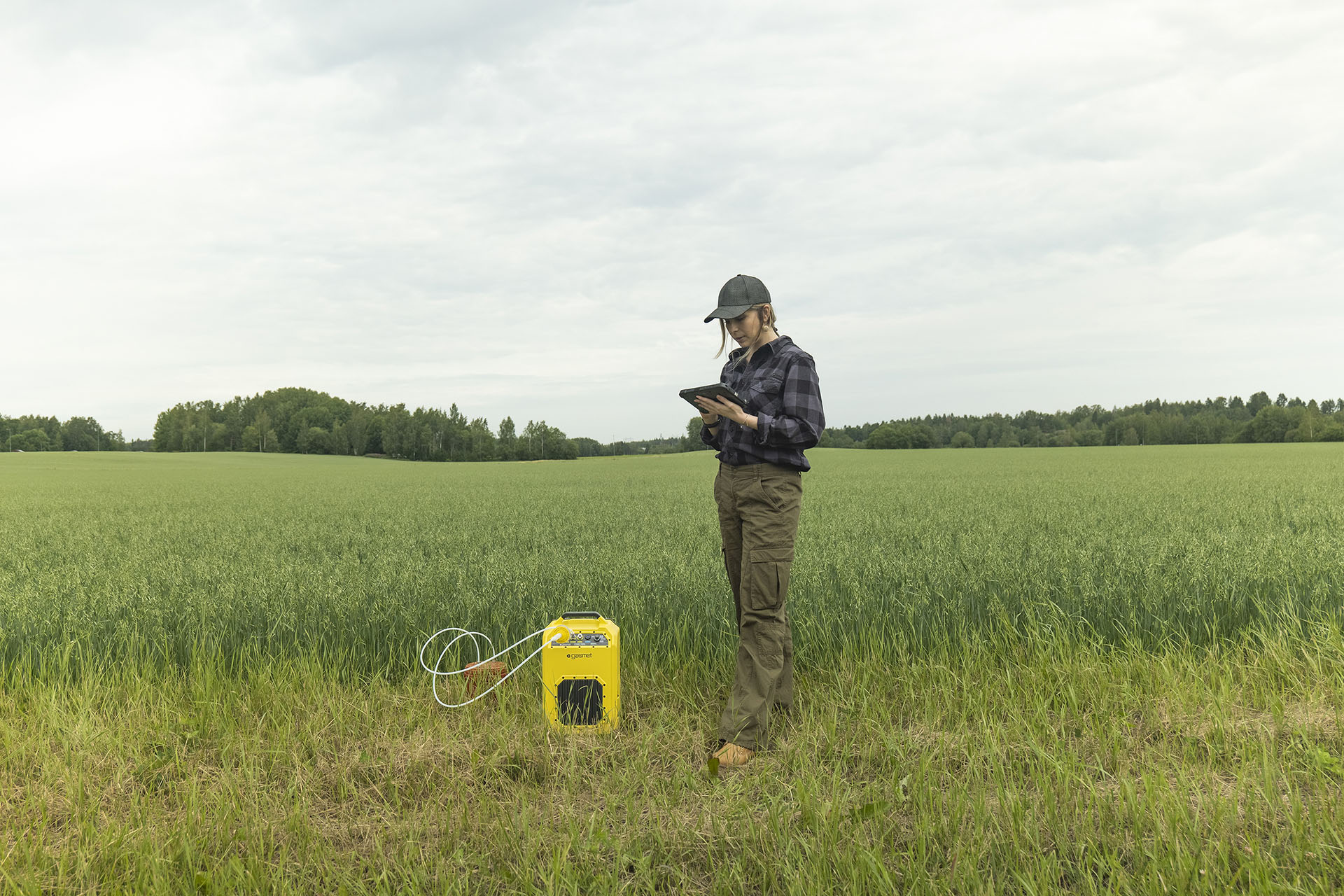
Each intensive site is equipped with state-of-the-art, multi-sensor infrastructure that enables simultaneous monitoring of soil, atmosphere, and crop dynamics. Measurements include soil nitrate (NO₃⁻) and ammonium (NH₄⁺) concentrations at multiple depths, soil moisture and temperature profiles, mineralisation indicators, and high-frequency observations of gaseous nitrogen losses. Emissions of N₂O, NH₃ and NOx are quantified using a combination of automatic and dynamic chamber systems, eddy covariance towers, and advanced trace gas analysers, allowing sub-daily resolution of gaseous fluxes under contrasting environmental conditions.
Beyond soil and atmospheric measurements, intensive sites integrate proximal and remote sensing technologies to track crop growth, canopy structure, biomass development, and nitrogen status. Multispectral and hyperspectral sensors, together with drone- and satellite-based observations, provide continuous information on crop demand, phenology, and spatial variability. This integration of belowground, aboveground and atmospheric data allows Nitrogen Use Efficiency (NUE) and nitrogen losses to be analysed as coupled processes rather than isolated indicators.
Intensive monitoring sites play a critical methodological role within NitroScope. They provide the reference datasets required to calibrate and validate process-based and machine-learning models, improve the representation of episodic nitrogen fluxes, and reduce uncertainty in nitrogen budget calculations. Data from these sites are used to refine emission factors, identify key drivers of nitrogen losses across pedo-climatic zones, and inform the design of scalable monitoring strategies for the wider network of data collection and farm sites.
By combining continuous measurements, advanced sensing technologies and modelling integration, the intensive monitoring sites enable NitroScope to move beyond static estimates and towards a dynamic, process-based understanding of nitrogen fluxes. This knowledge is essential for developing robust decision-support tools, improving EU-level nitrogen budgets, and designing effective mitigation strategies that respond to real-world variability in climate, soils and management practices.
Intensive monitoring sites are located in Belgium, Greece, Italy, Norway, Finland, Estonia, Switzerland, Portugal and Spain.
See also...
Α. Pilot sites
Five pilot sites test improved nitrogen management and conservation strategies under real field conditions. Monitored over two growing seasons across different pedo-climatic zones, they link practices to impacts on NUE, crop performance and nitrogen losses.
B. Intensive monitoring sites
Nine intensive monitoring sites provide continuous 24/7 measurements over about 24 months, starting in February 2027, capturing short-term variability in nitrogen fluxes. They monitor soil nitrogen, gaseous emissions, soil conditions and crop dynamics to generate reference datasets and reduce modelling uncertainty.
C. Regional data collection sites
Around 100 regional data collection sites ensure broad coverage of Europe’s soils, climates and cropping systems. Their harmonised, multi-season datasets support model calibration, regional comparison and upscaling to national and EU levels.